

MSite Face
MSite Face is a highly accurate facial recognition solution that integrates with our access control equipment such as Pods and turnstiles. It biometrically verifies worker identity and allows workers access to sites, based on their user permissions and qualifications.
Site managers can set custom parameters, ensuring only the right people can access certain areas at certain times, cutting the risk of accidents and injury due to unqualified or ill-prepared workers undertaking unsuitable tasks.

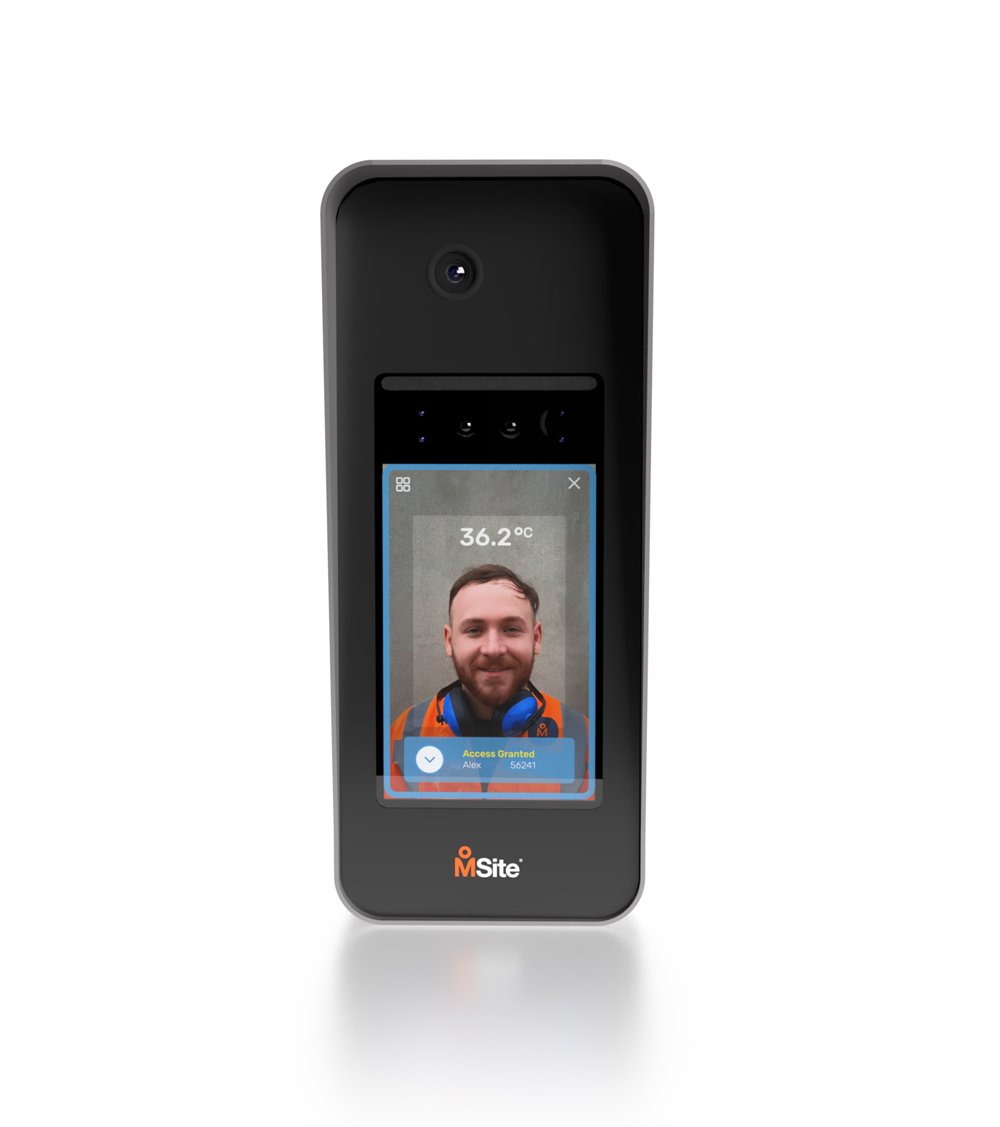
Biometric site access control with impressive specs
Featuring a crystal-clear 7” LCD screen, the MSite Face biometric site access device is dustproof and waterproof (IP65) and easy to maintain. The durable casing has been designed with construction sites in mind and is able to withstand bumps and scrapes that may render other screens useless. There is also an optional temperature screening module available - a handy addition to help detect illnesses such as infections or Coronavirus, keeping sites even safer.
Construction site security and safety as a priority
Our easy-to-use device provides contactless sign-in and site access for your workforce, encouraging good hygiene and limiting the transmission of bacteria among staff.
With a built-in walkthrough on how to use our facial recognition technology, gaining site access through facial recognition has never been quicker, easier or more secure.
If the user of MSite Face has incorrect permissions to enter your site or is not recognised by the reader, they will be denied access and the result will be instantly flagged to the relevant manager, so the appropriate action can be taken.
Download the MSite Face Overview
Fill in the form to download the MSite Face overview
.png)
Contactless Sign-in & Site Access
Automatically blocks site access if operatives don’t have the correct permissions.
.png)
Easy Enrolment
Easily enrol new workers from the MSite system, the CITB database or a webcam.
.png)
GDPR Compliance
Workers data is secure and encrypted, ensuring full GDPR compliance.
Reliable facial recognition for impeccable site security
✔️ Using infrared technology, the cameras built-in sensors can recognise faces quickly and accurately. It even works in poor lighting conditions.
✔️ An anti-spoofing solution, MSite Face prevents spoofing using photography or 3D-printed masks, ensuring only legitimate workers are allowed on-site.
✔️ As Face Reader is a contactless solution, it reduces the spread of germs. It also has an optional feature to automatically restrict site access if a worker's skin temperature is too high.
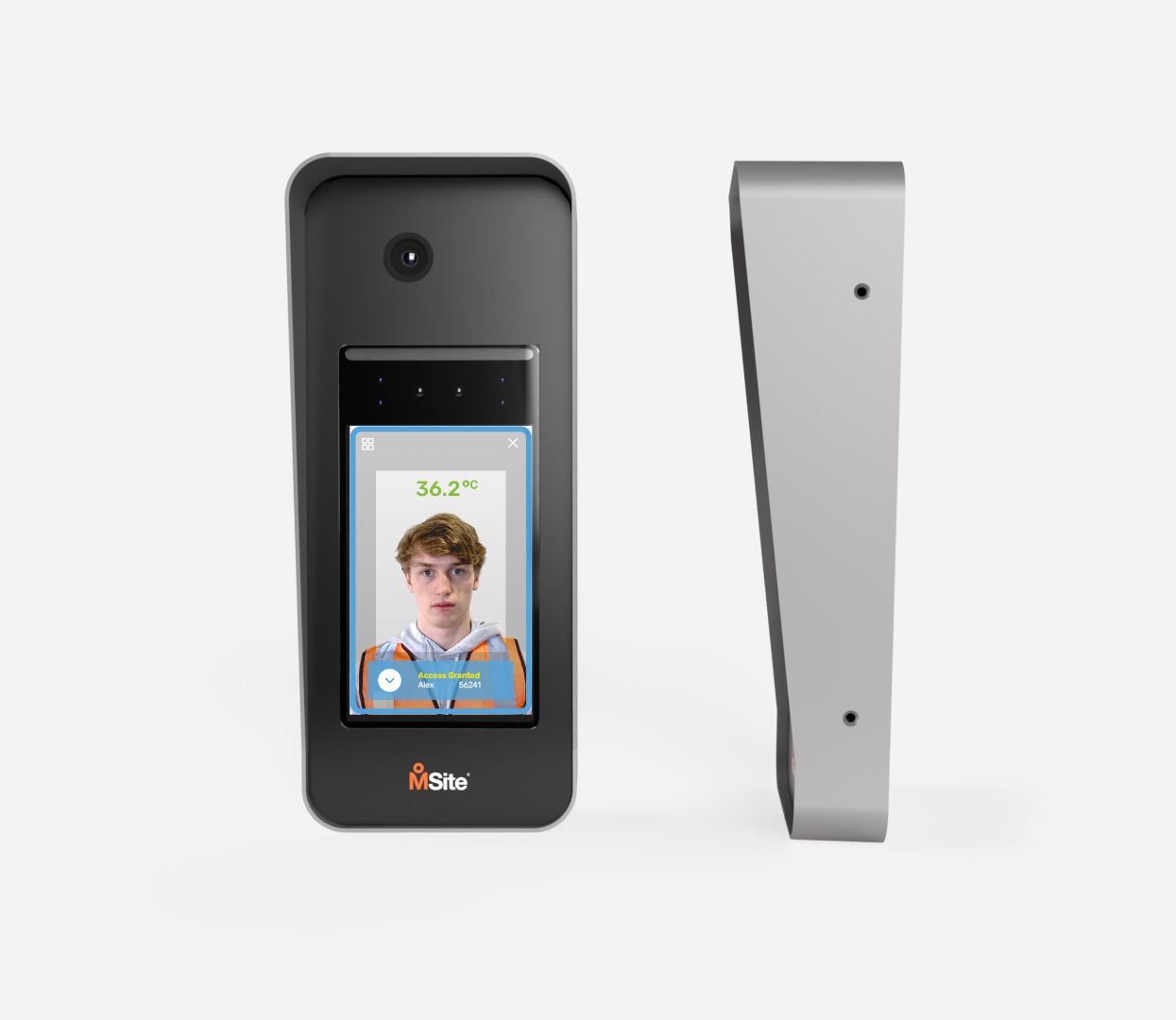
MSite Face Technical Specifications
Maximum Dimension

Front
147mm x 334mm

Side
98mm
Recognition Distance
0.5m ~ 1.3m
Recognition Height
140cm ~ 190cm
Operating temperature
-20°C ~ 50°C
Operating Humidity
0% ~ 80%, non-condensing
LCD Resolution
800 x 1280 pixels
Matching Speed
Less than 0.5 sec
Max. User (1: N)
50,000
Interface
TCP/IP
IP Rating
IP65
Anti-spoofing
Additional Information
Please ensure Temperature Screening module is installed in an indoor and windless environment.
MSite Temperature Screening
Temperature Accuracy
≤±0.5°C (0.9°F)*/±0.3°C (0.5°F)**
*For ±0.5°C accuracy, use the device:
- In recommended ambient temperature (10°C to 35°C or 50°F to 95°F)
- 90 minutes after turning on for self-calibration
**According to KOLAS (Korea Laboratory Accreditation Scheme) calibration certificate.
Max. Resolution
120 x 160 (19,200 pixel)
Frame Rate
25fps
NETD
≤ 50 mK (@25°C, F# = 1.0)
Field of View
37.2° × 50° (H × V)
Temperature Range
30°C to 45°C
Temperature Distance
50 cm~130 cm
Interface
USB
Operating Temperature
0°C to 50°C
Limitations
Disclaimer
MSite products cannot be used to diagnose any medical condition. MSite Thermal cameras can only identify individuals with skin temperature higher than a preset figure but should not be solely or primarily relied upon to diagnose or exclude a diagnosis of COVID-19, or any other illness.
The accuracy of temperature readings can be impacted by various environmental conditions such as temperature, exposure to sunlight and exposure to windy conditions. The unit should be installed internally in a wind free environment.
Please ensure Temperature Screening module is installed in an indoor and windless environment.
Book a free Demo
Find out more about how you can benefit from MSite's reliable, safety-enhancing workforce management tools

FAQ's
How quickly does the MSite Face perform biometric transactions?
MSite Face authenticates worker identity using a powerful face recognition algorithm which matches in less than 0.5 seconds, rapidly checking if they have the required site permissions and granting site access if everything checks out, allowing for quick, contactless biometric sign-in and site access
How easy is it to enrol a worker’s faces onto the MSite Face?
Enrolment for biometric facial recognition is very easy; we have several options available. These include:
- Capture an image with the PC’s webcam
- Upload an image from the PC’s hard drive
- Using an image pulled from the CITB/CSCS database
- Capture a photo using the MSite Supervisor App
Is the solution GDPR compliant?
All biometric data is encrypted and stored securely, fully in line with GDPR regulation. For more information on our how we manage and protect your data, head over to https://www.msite.com/gdpr-data-security.